• Link to X
  • Link to Facebook
  • Link to LinkedIn
  • Link to Youtube
  • [email protected]
  • Español
984 11 10 10
ABAMobile
  • HOME
  • SERVICES
    • Mobile App Development
      • Mobile App Development
      • iOS app development
      • Android app development
      • Smart tv app development
      • Wearables app development
      • Progressive Web App Development for Business
      • Apps for manufacturing companies
      • Encapsulation of web pages
    • Mobile Business Solutions
      • Enterprise Mobility Solutions
      • Technology Consulting
      • App maintenance
      • MVP Minimum Viable Product
      • Digital work orders
      • Online Catalog App
  • INDUSTRIES
    • Industries
      • Industry 4.0
      • Healthcare
      • Logistics and Transport
      • Construction and Engineering
      • Tourism and travel
      • Telecommunication
      • Finance
      • Public Sector
      • Retail
      • Insurance
  • CASE STUDIES
  • TECHNOLOGIES
    • Frameworks
      • Flutter
      • Kotlin
      • Swift
      • Angular
      • React Native
    • Integrations
      • APIs for Mobile Apps Development
      • Mobile App Development with Beacons
      • Integrated Payment Systems in Mobile Apps
    • Other technologies
      • NFC Technology
      • Bluetooth
      • QR Codes
      • Wifi Technology
  • NFC TECHNOLOGY
  • COMPANY
    • Company
      • About Us
      • Recognitions and Certifications
      • Testimonials ABAMobile
  • NEWS
  • CONTACT
  • Menu Menu
You are here: Home1 / Noticias2 / Blogs3 / Technology4 / Differences Cloud Computing vs Edge Computing

Differences Between Cloud Computing and Edge Computing

Thanks to technologies and devices, the generation of information and data is unstoppable. Millions of data are generated every day and need to be processed. As a result, services are emerging that improve these processes, among which we can highlight cloud computing and edge computing.

Although they may seem the same, we will talk about their differences and how each of them is used. In addition, we will answer questions such as why are they so important in companies nowadays, and if they represent a technological and business revolution.

Read on to find out the differences between cloud computing and edge computing and see which service might be best for your company.
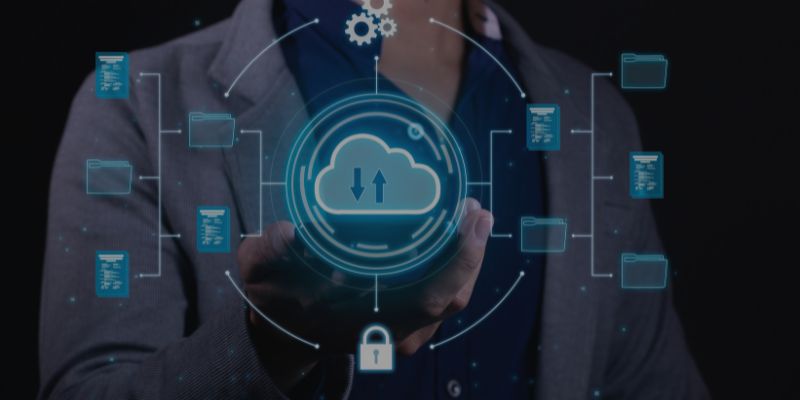
differences between cloud computing and edge computing

Find out the most popular frameworks for cross-platform app development

LEARN MORE

What is cloud computing?

Cloud computing is a set of technologies that allow remote access to software, as well as the storage and processing of data that is processed by artificial intelligence.

Cloud computing is characterised by the fact that data is not stored on local servers, but resources are accessed through the equipment of cloud service providers.

It should be noted that cloud computing services are unlimited data storage systems that optimise IT processes. For example, e-mail is a cloud computing service that we use on a daily basis and that we are often unaware of.

Among the advantages of using a cloud computing service are the great capacity to store information and data, its lightness and speed, as well as the savings in equipment, as it is not on local services but on those of the providers.

Mobile cloud computing

Cloud computing services adapt to different environments and the increasing use of mobile devices means that cloud computing services need to be adapted. Mobile cloud computing uses cloud computing to deliver apps to mobile devices.

In this way, apps use fewer device resources, adapt to different operating systems, and the information stored in the cloud is more secure.

Cloud computing is not the only computing service that is becoming more popular, edge computing is also on the rise, which is why in this post we explain the differences between the two.

What is a channel-less strategy? What are its advantages?

LEARN MORE

What is edge computing?

When cloud computing goes one step further and evolves, we can talk about edge computing.

This type of computing service allows data storage and processing to be brought closer to the source where it originates. Thanks to edge computing, the devices capable of collecting data are also responsible for processing and storing them.

In this way, edge computing acquires the advantages of cloud computing and brings data closer to the users. In addition, it makes fewer processes run in the cloud, improving the speed of IoT devices.

One of the great features of edge computing is the ability to process a lot of data in real-time.

Such services are used in autonomous cars or in the world of healthcare, where robots are used to improve patient care.

Differences between cloud computing and edge computing

Although both services have in common the storage and processing of data and information, there are some aspects that make the difference between cloud computing and edge computing.

The biggest difference between cloud computing and edge computing is the way in which data is handled. Cloud computing stores data in the cloud; edge computing brings data closer to users and their devices.

Edge computing, on the other hand, requires little bandwidth because of where the data is processed.

It should be noted that cloud computing can process large amounts of data and is a centralised system controlled by a single organisation, while edge computing’s capacity to process data is more limited and its distribution is decentralised.

These are some of the differences between cloud computing and edge computing that will help you to know better both systems and which one can be the most interesting to implement in your company.

The ABAMobile team has been developing mobile applications and digital solutions for more than 10 years and is familiar with the world of software in various fields. Contact our team without obligation and we will advise you!

Get in touch with our team to start your next development project!

CONTACT US

Recent Posts

  • retos de la transformacion digital y como afrontarlos
    Challenges of Digital Transformation in 2025 and Solutions3 January 2025 - 12:12
  • fleet management app
    Fleet Management App: What It Is and How It Works2 January 2025 - 15:34
  • iomt apps and technology applied to healthcare
    What is IoMT? Apps and Technology Applied to Healthcare2 January 2025 - 13:37
  • web vs app which is better
    Web vs App Development, which is better for your business?31 December 2024 - 10:09

Categories

CONTACT

Adress: 21 Peña Brava, Silvota, LLanera, Asturias, 33192

Phone: + 34 984 11 10 10

Email: [email protected]

PRIVACY POLICY

  • Legal Advice
  • Cookies Policy
  • Privacy Policy

PARTNERS

ClusterTIC Asturias
innovasturias
NFC Forum

PROJECT SUPPORTED BY

Fondo Social Europeo
IDEPA Fondo Social Europeo

RECOGNITIONS

logo empresa base tecnologica ABAMobile
certificaciones ISO ABAMobile
Copyright © 2012-2026 ABAMobile Solutions S.L Aviso Legal - Enfold Theme by Kriesi
  • Link to X
  • Link to Facebook
  • Link to LinkedIn
  • Link to Youtube
Scroll to top Scroll to top Scroll to top
Gestionar consentimiento
Para ofrecer las mejores experiencias, utilizamos tecnologías como las cookies para almacenar y/o acceder a la información del dispositivo. El consentimiento de estas tecnologías nos permitirá procesar datos como el comportamiento de navegación o las identificaciones únicas en este sitio. No consentir o retirar el consentimiento, puede afectar negativamente a ciertas características y funciones.
Funcional Always active
El almacenamiento o acceso técnico es estrictamente necesario para el propósito legítimo de permitir el uso de un servicio específico explícitamente solicitado por el abonado o usuario, o con el único propósito de llevar a cabo la transmisión de una comunicación a través de una red de comunicaciones electrónicas.
Preferencias
El almacenamiento o acceso técnico es necesario para la finalidad legítima de almacenar preferencias no solicitadas por el abonado o usuario.
Estadísticas
El almacenamiento o acceso técnico que es utilizado exclusivamente con fines estadísticos. El almacenamiento o acceso técnico que se utiliza exclusivamente con fines estadísticos anónimos. Sin un requerimiento, el cumplimiento voluntario por parte de tu proveedor de servicios de Internet, o los registros adicionales de un tercero, la información almacenada o recuperada sólo para este propósito no se puede utilizar para identificarte.
Marketing
El almacenamiento o acceso técnico es necesario para crear perfiles de usuario para enviar publicidad, o para rastrear al usuario en una web o en varias web con fines de marketing similares.
  • Manage options
  • Manage services
  • Manage {vendor_count} vendors
  • Read more about these purposes
Ver preferencias
  • {title}
  • {title}
  • {title}